
Why do I see "Potential Violations" when my driver used Adverse or Emergency Conditions?
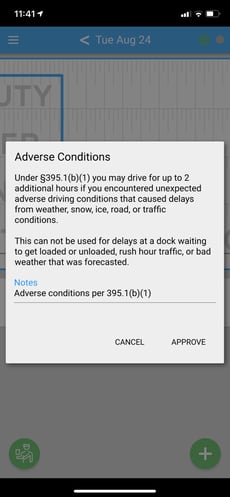
When a driver indicates Adverse Driving Conditions or Emergency Conditions in the app, our system extends their available driving time by 2 hours. The driver's time gauges in the app reflect this extension, and the driver is operating in compliance with federal regulations.
However, you may notice that our web portal shows these days as having "Potential Violations." This is not an error—it reflects how the FMCSA's log review system will display the driver's records.
The Limitation
The FMCSA does not give ELD providers a dedicated way to report when a driver is using adverse or emergency conditions. According to the FMCSA's guidance, drivers must use the annotation feature to record these situations, and inspectors review these annotations manually.
The FMCSA's log review tool (eRODS) calculates hours-of-service compliance but does not automatically account for the time extension that adverse or emergency conditions provide. This means that when an inspector reviews the driver's logs in eRODS, the system may flag the day as a violation even though the driver was legally compliant.
What We Do
To help you prepare for audits and inspections, we display "Potential Violations" on any day where the driver indicated Adverse or Emergency Conditions and the time extension made a difference in their compliance. This alerts you to days that may require explanation during a review.
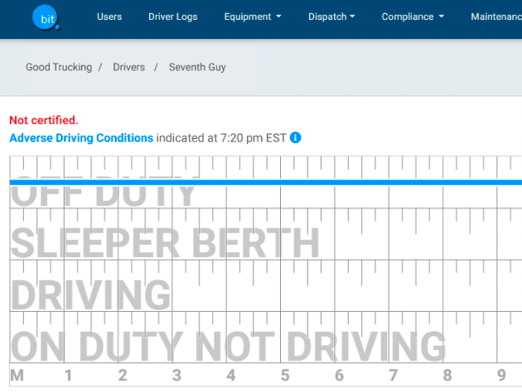
When the driver indicates these conditions in the app, we include the appropriate annotation in the data file sent to the FMCSA, noting the regulatory basis for the extension. The driver can also add to the note with the reason for claiming adverse conditions.
During a Roadside Inspection
If a driver is stopped for a roadside inspection and their logs from the past 8 days include usage of Adverse or Emergency Conditions that affected their compliance:- The driver should proactively inform the inspector that they used the adverse or emergency conditions exception
- The driver should point the inspector to the annotation in their logs that documents this
- The inspector may not immediately see this information in their review tool, so verbal communication is important